
Final assembly is where complexity meets critical precision. It’s a high-stakes environment defined by mixed-model production, high variant diversity, labor-intensive tasks, and strict quality requirements. Unlike earlier stages, final assembly demands flexibility and accuracy for a wide range of products and variants — making it the ideal setting for collaborative robots (cobots).
Traditional industrial robots often fall short here because they require extensive programming and safety fencing, making them rigid and costly for mixed-model lines. Enter power-and-force-limited cobots: designed to work safely alongside people without cages, these machines bring agility and safety together, adapting quickly to changing assembly tasks.
Our experience at Jeenoce across automotive and consumer electronics (3C) final assembly lines consistently shows tangible benefits:
30% average productivity gains by speeding takt times without compromising quality
Near-zero collision injuries, thanks to advanced safety features aligned with ISO/TS 15066
Over 50% reduction in repetitive strain injuries, improving ergonomics and worker well-being
This track record proves that final assembly isn’t just a testing ground — it’s where human-robot collaboration truly delivers.
When it comes to human-robot collaboration in final assembly, safety is non-negotiable. The ISO/TS 15066 standard is the go-to guideline that sets clear limits on how collaborative robots (cobots) should behave around humans. It covers everything from acceptable force levels during contact to safe speeds and separation distances, explained in plain terms to make risk management straightforward.
Key technologies make collision-free work possible:
Force and torque limiting: Cobots automatically reduce their power to prevent injuries if they unexpectedly touch a person.
Speed and separation monitoring: Sensors adjust robot speed or stop movement when workers are near.
Vision safety systems: Cameras and AI detect human presence and predict motion paths to avoid collision.
A solid risk assessment tailored for mixed-model, labor-intensive final assembly cells is essential. It identifies hazards and sets safety measures aligned with real-world workflows.
At Jeenoce, we put these principles into action on an automotive door-assembly line. By redesigning the workspace and deploying force-limiting cobots with advanced monitoring, we cut recordable injury incidents from 12 per year to zero within 18 months. This case clearly shows how robust safety design enables smooth and secure human-robot teamwork in manufacturing.
For more on how we ensure safety in collaborative workspaces, check our detailed insights on smart manufacturing automation.
Cobots shine when it comes to reducing takt time in mixed-model assembly lines without forcing rigid product designs. Instead of slowing down to fit a robot, cobots adapt alongside the human worker, enabling parallel task execution—both human and robot can work on the same part at the same time. This teamwork slashes cycle times while keeping flexibility intact.
A big win here is changeover time reduction, where lean manufacturing methods like SMED (Single-Minute Exchange of Dies) combine with cobot-friendly quick-grip end-of-arm tooling (EOAT) to speed up tool or product switches. This means less downtime and smoother line transitions, critical for high-variant final assembly.
Dynamic line balancing with real-time task allocation further boosts efficiency. For example, on an instrument panel line, Jeenoce helped cut cycle time from 38 seconds down to 26 seconds by redistributing tasks between humans and cobots based on current conditions and bottlenecks. This responsive approach maximises throughput while keeping workloads manageable.
Together, these strategies show how collaborative robots enable flexible assembly line cycle time reduction without locking in product choices.
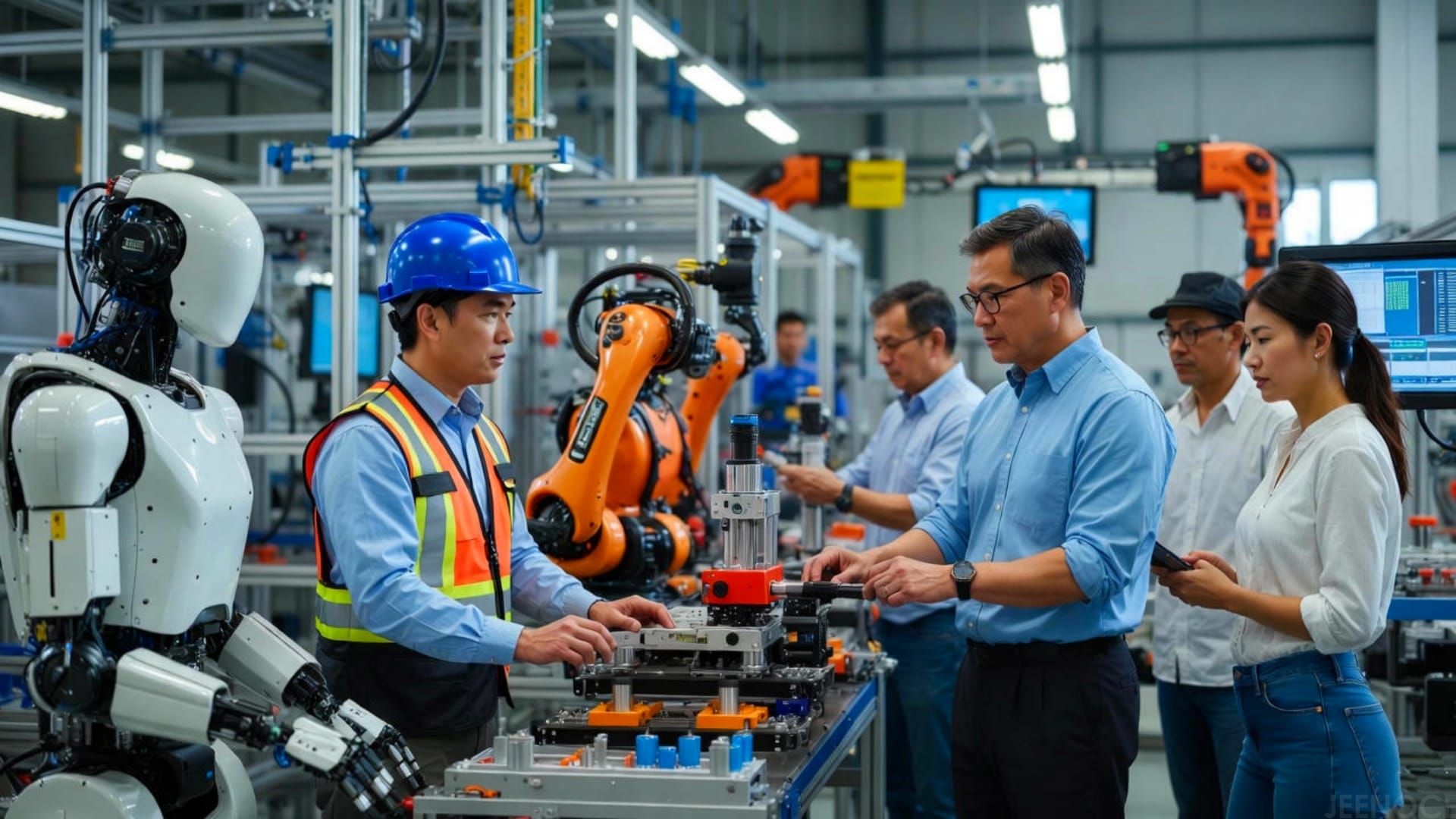
Even the best cobot technology can stumble if workers don’t embrace it. Without cultural buy-in, technology success rates often drop from around 90% in pilot phases to less than 50% during full rollouts. This gap highlights how crucial soft skills and worker acceptance are in human-robot collaboration.
Generational differences shape how operators see cobots. Gen-X workers might approach collaborative robots with healthy skepticism, valuing stability and proven methods. Meanwhile, Gen-Z operators, who grew up with digital tech, tend to be more open and curious but may expect smoother interfaces and better usability.
To bridge these gaps, proven operator retraining frameworks like Jeenoce’s 3-day hands-on “Cobot License” program help build confidence and competence. This practical training doesn’t just teach robot operation—it fosters trust and teamwork.
We also use gamification and trust-building exercises during retraining, plus co-design sessions where operators help shape their workstations. This inclusive approach boosts acceptance and improves productivity.
Measuring how well people accept cobots is key. Our data from 2026-2026 shows that using tools like the Net Promoter Score for robots gives clear insights into worker sentiment and helps guide ongoing improvements.
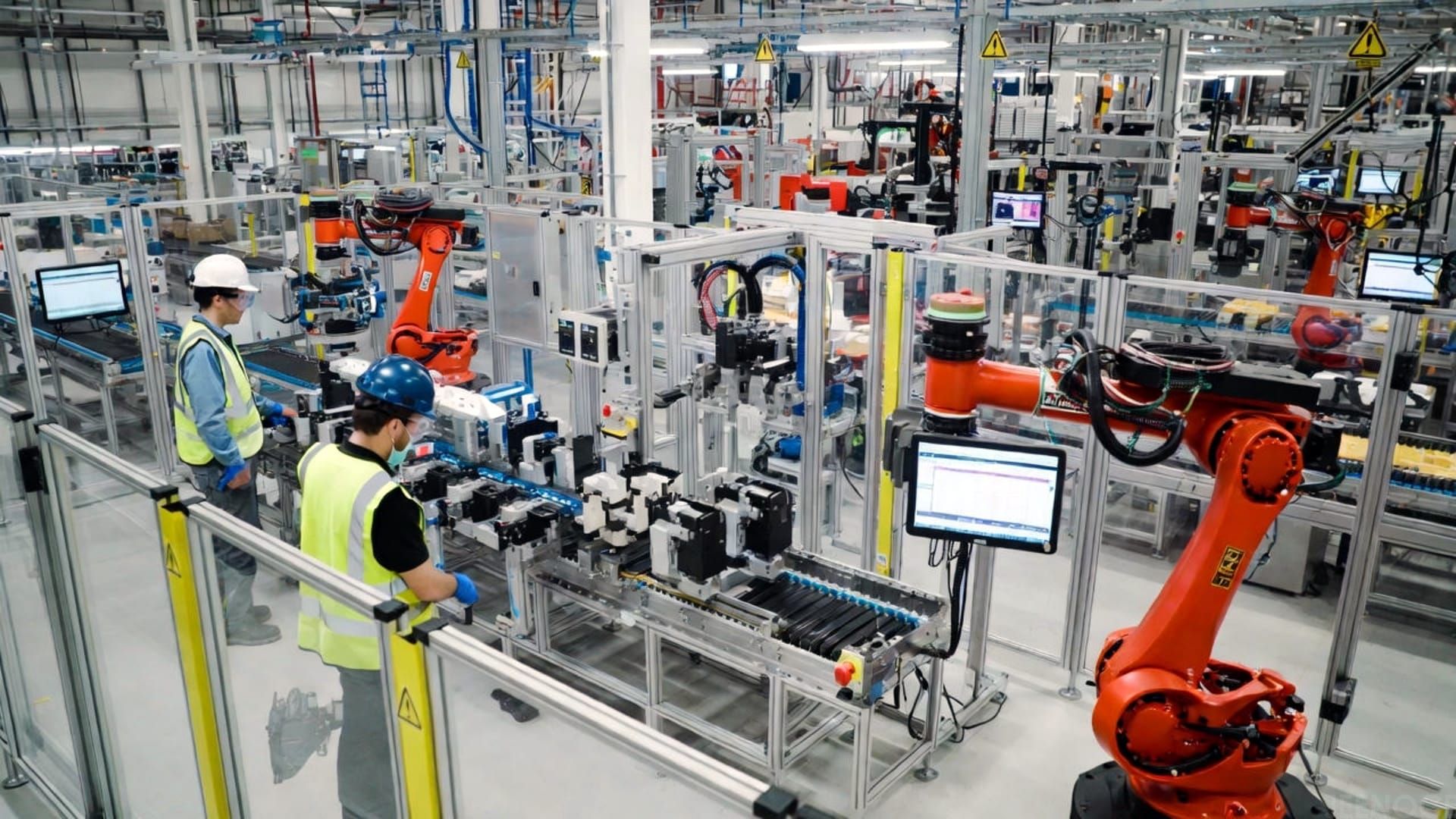
Making human-robot collaboration work in final assembly takes a clear, phased approach. Here’s a practical 12-month rollout blueprint to ensure success:
Start by choosing the right pilot cell — ideally one with high manual labor, measurable inefficiencies, and low risk of production disruption. This ensures quick wins and valuable learnings.
Conduct a thorough risk assessment based on ISO/TS 15066 to design collision-free, force-limited workspaces. Incorporate vision safety systems and speed monitoring to keep operators safe without slowing down production.
Pick cobots that match payload and reach requirements, with end-of-arm tooling (EOAT) capable of quick-change to adapt fast for mixed-model assembly needs.
Use digital twin simulations to mimic real assembly scenarios, optimizing human-robot task allocation and balancing mixed-model lines. This reduces cycle times and smooths changeovers.
Launch a hands-on retraining program, like Jeenoce’s 3-day “Cobot License,” to build operator confidence and promote smooth human-cobot teamwork.
Deploy the cell with live overall equipment effectiveness (OEE) tracking to spot bottlenecks instantly and measure productivity improvements.
Leverage AI-driven task reallocation and predictive analytics to continually refine process flow and maximize uptime.
Following these phases creates a strong foundation for flexible, safe, and efficient human-robot collaboration in final assembly.
When investing in collaborative robots for final assembly, understanding the ROI is crucial. Typically, the payback period falls between 8 to 14 months, depending on the complexity of the cell and the tasks automated.
Labor savings: Reduced need for manual repetitive tasks and overtime.
Quality improvements: Fewer defects and lower rework costs thanks to consistent cobot precision.
Ergonomics claims: Significant drop in repetitive strain injuries cuts healthcare and compensation expenses.
To make ROI calculations easier for your specific production environment, Jeenoce offers a free downloadable Excel ROI calculator. It helps you input your costs and expected improvements to get a clear financial picture before committing.
When introducing collaborative robots in final assembly, it’s easy to fall into some common traps that limit success. Here’s what to watch out for:
Treating cobots as “cheap labor” instead of true collaborators. Cobots aren’t just tools to reduce headcount—they’re designed to work hand-in-hand with humans, improving overall workflow and quality. Overlooking this can lead to missed productivity and innovation gains.
Under-investing in operator training. Without proper retraining programs, worker resistance rises, and in worst cases, sabotage or careless mistakes increase. A solid operator retraining strategy builds trust and smooths the human-robot teamwork manufacturing process.
Ignoring workspace layout for real hand-over-hand collaboration. Efficient human-cobot interaction relies on good cell design. Skipping this step often results in bottlenecks and safety issues, negating cycle time reduction benefits with cobots.
Avoid these pitfalls to ensure your flexible final assembly automation delivers on safety, speed, and ergonomic improvements. For guidance on workspace design and risk assessment, check out our detailed insights on collaborative workspace safety and robot risk assessment methodologies.
Looking ahead, the future of human-robot collaboration in final assembly is all about smarter, more flexible systems. At Jeenoce, we’re already deploying advanced vision systems that let cobots “see” their environment better, improving accuracy and safety in dynamic workflows. Combined with AI-driven task allocation, robots can adapt on the fly — optimizing who does what based on real-time data and reducing bottlenecks without freezing production schedules.
We’re also moving beyond fixed robot stations to fully flexible, plug-and-produce cells. Mobile cobots can now travel around the shop floor, lending a hand where needed and enabling faster changeovers and line balancing. This mobility adds a whole new layer of flexibility, especially in mixed-model and high-variant assembly lines.
These innovations represent a leap from traditional assembly automation to dynamic, collaborative ecosystems—helping manufacturers cut cycle times, boost quality, and truly customize workflows. You can explore how Jeenoce’s cutting-edge solutions are shaping the future of flexible final assembly automation in our detailed technical insights on smart automation integration.
By embracing these trends today, manufacturers can stay ahead of the curve and turn exciting concepts like AI task allocation and mobile cobots into everyday, productive realities on the line.
Message

 Return to list